Client typeHealthcare organization
SEO scopeService pages, schema, directories
Conversion pathCalendly intake flow
ReportingGA4 and GTM dashboard
Healthcare websites have to solve trust and action together
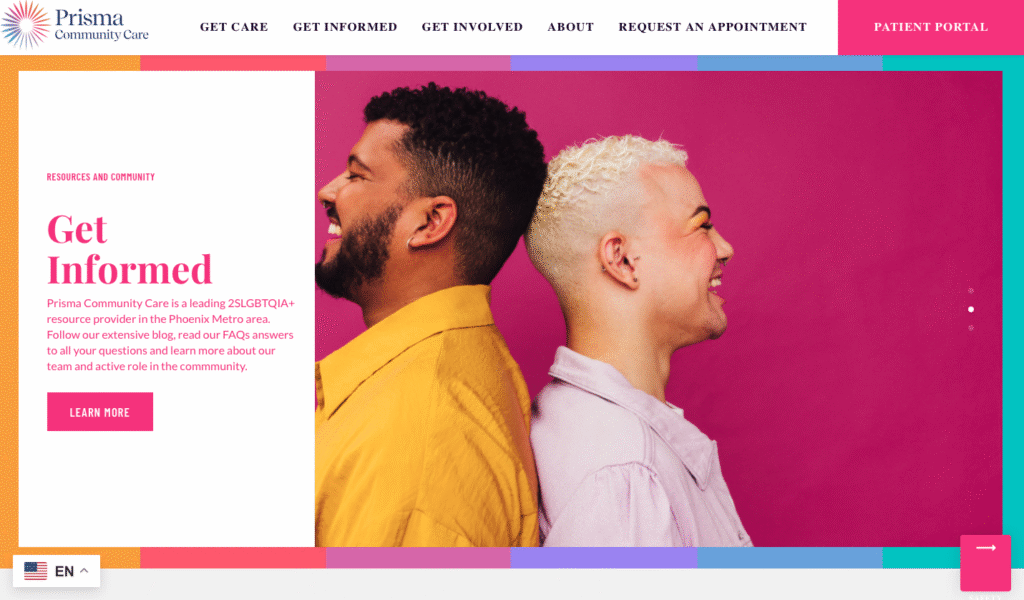
Prisma Care is a Phoenix healthcare proof point where the website work was not only about visual design. The project centered on making services easier to find, strengthening the organic search foundation, and improving the path between patient interest and a measurable next step.
That matters because healthcare visitors often arrive with practical questions, sensitive concerns, and low patience for confusing navigation. A site like this has to feel clear, calm, credible, and actionable.
What the project focused on
The proposal-backed scope connected SEO, service-page structure, conversion tracking, and intake flow improvements into one website system.
- Technical SEO foundation: The project included a technical SEO audit, crawl and indexing review, sitemap and metadata setup, performance review, and prioritized fixes.
- Keyword and search-intent research: Keyword work focused on realistic healthcare searches around services such as PrEP, HIV testing, STI testing, LGBTQ-affirming primary care, and related Phoenix-area intent.
- Service-page optimization: The scope included on-page optimization for the homepage and eight Get Care service pages, including titles, meta descriptions, headings, copy alignment, and short summary sections near the top of priority pages.
- Local entity cleanup: Google Business Profile review, major-directory cleanup, and Prisma-versus-related-entity clarity were included to reduce confusion in local search.
- Schema and AI-search readiness: Organization, website, breadcrumb, service, and FAQ-style structured data were part of the foundation so search engines and AI systems could understand the site more clearly.
- Tracking and reporting: Google Tag Manager and GA4 tracking were scoped around useful actions such as calls, directions, appointment/contact actions, landing page conversions, and booking activity.
- Patient-friendly intake flow: The project replaced a more manual request flow with a Calendly-based interest-call path, Outlook calendar sync, reminders, rescheduling, and site-wide New Patient calls to action.
- Campaign landing pages: Primary Care and HIV Services landing pages were scoped to support both ad campaigns and organic search entry points.
- Stakeholder dashboard: A custom reporting dashboard was included so leadership, board, grant, and marketing stakeholders could see website and conversion performance in one place.
Search visibility only helps if the next step works
For a healthcare organization, ranking for the right search is only part of the job. The page also has to explain the service clearly, reduce friction, and make the next action easy to track.
What the site had to get right
Healthcare and nonprofit websites carry a different kind of responsibility than ordinary brochure sites. The experience has to be useful without overpromising, organized without feeling cold, and measurable without creating unnecessary friction.
- Trust at a glance: The site needed a calm, credible presentation that did not feel confusing or cluttered.
- Clear service navigation: Visitors needed to understand care options and find the right service path quickly.
- Careful claims: Healthcare pages should explain services and access points without unsupported outcome claims.
- Measurable conversions: Calls, directions, appointment actions, landing page conversions, and booking events needed to be trackable.
- Local-search clarity: Healthcare entity details, directories, schema, and service-page targeting all needed to support cleaner discovery.
- Practical stakeholder reporting: The work needed to help internal leaders and marketing partners understand what was happening after launch.
Why this matters for healthcare and nonprofit organizations
A healthcare or nonprofit website should not make visitors work hard to understand what help is available. The structure should guide people toward the right service, explain what to expect, and make contact or appointment paths easy to find.
For TurnKey, Prisma Care connects our website design, local SEO, and website support work in one proof point. The same kind of strategy can help clinics, nonprofits, churches, community organizations, and service businesses that need a website to rank, explain, convert, and report clearly.
This page is also intentionally cautious. It focuses on the website, SEO, tracking, and conversion system work without making unsupported ranking claims or healthcare outcome claims.
Related TurnKey pages
FAQ
Frequently asked questions
Why is Prisma Care a useful healthcare website example?
Prisma Care is useful because the project connected healthcare service-page clarity, SEO foundation work, schema, tracking, directory cleanup, intake flow, campaign landing pages, and reporting.
What should healthcare website design prioritize?
It should prioritize trust, accessible navigation, readable service information, careful claims, measurable next steps, and conversion paths that help visitors understand what to do next.
Can healthcare project pages help SEO without making medical claims?
Yes. A project page can explain the website, SEO, tracking, schema, and conversion work without making unverified ranking claims, performance claims, or medical outcome claims.
Next Step
Ready to talk through the plan?
If your healthcare, nonprofit, or service organization needs clearer pages, stronger SEO, and a more trustworthy conversion path, we can help map the next step.